What Is Sleep Hygiene?
Sleep hygiene refers to the habits, behaviors, and environmental factors that influence your ability to fall asleep and stay asleep. Think of it as the daily practices that set the stage for quality rest.
Good sleep hygiene alone may not cure chronic insomnia — for that, you may need a structured approach like CBT-I. But it forms the essential foundation that all other sleep improvement strategies build upon. And for many people, addressing sleep hygiene gaps is enough to meaningfully improve their sleep.
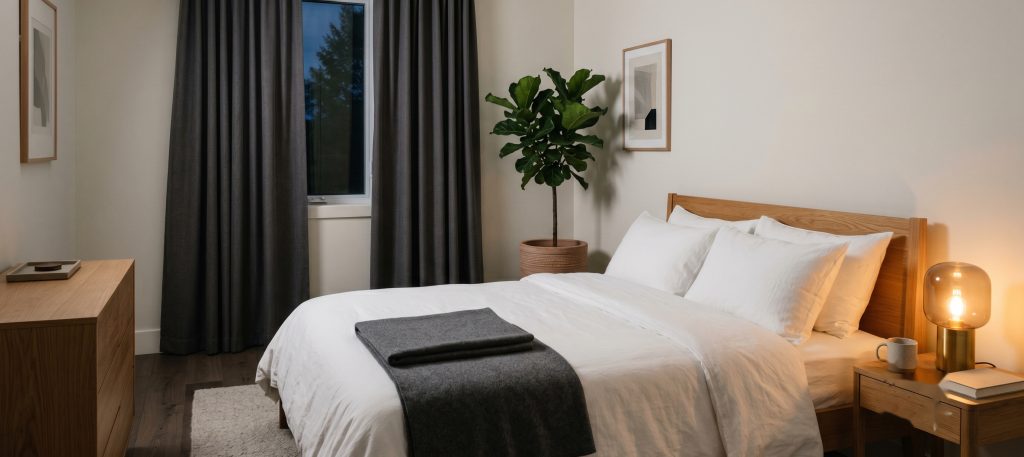
Your Bedroom Environment
Temperature
Your core body temperature needs to drop slightly for sleep to initiate. A bedroom that is too warm fights against this natural process.
- Keep your bedroom between 65-68°F (18-20°C)
- A cooler room is generally better than a warmer one
- Use breathable bedding materials (cotton, bamboo, linen)
- If you tend to sleep hot, consider moisture-wicking sheets or a cooling mattress pad
Light
Light is the strongest signal to your circadian clock. Even small amounts of light in the bedroom can suppress melatonin and delay sleep onset.
- Make your bedroom as dark as possible
- Use blackout curtains or a sleep mask
- Cover or remove light-emitting electronics (alarm clocks, charger LEDs, standby lights)
- If you need a nightlight for safety, use dim red or amber light (not blue or white)
Sound
Noise disrupts sleep even when it doesn't fully wake you. Partial arousals caused by noise fragment your sleep architecture and reduce restorative deep sleep.
- Use earplugs if your environment is noisy
- A white noise machine or fan can mask inconsistent environmental sounds
- Keep your phone on silent or Do Not Disturb mode
- If you live with others, communicate your sleep schedule
Your Bed
Your mattress and pillow directly affect sleep comfort and spinal alignment.
- Replace mattresses every 7-10 years, or sooner if you wake with aches
- Choose a pillow that supports your neck in a neutral position for your sleep position
- Reserve your bed for sleep only — not work, eating, or extended screen time
- This association between bed and sleep is a core principle of stimulus control therapy
Daily Habits That Affect Sleep
Caffeine
Caffeine has a half-life of approximately 5-6 hours, meaning half the caffeine from your afternoon coffee is still in your system at bedtime.
- Stop caffeine consumption by early afternoon (noon to 2 PM for most people)
- Remember that caffeine is found in coffee, tea, soda, chocolate, energy drinks, and some medications
- Individual sensitivity varies — some people metabolize caffeine slower due to genetics
- If you suspect caffeine is affecting your sleep, try eliminating it for 2 weeks and observe the difference
Alcohol
Alcohol is sedating, which leads many people to use it as a sleep aid. However, alcohol significantly disrupts sleep quality.
- Alcohol suppresses REM sleep, especially in the first half of the night
- It causes more frequent awakenings in the second half of the night as your body metabolizes it
- It relaxes the muscles in your throat, worsening snoring and sleep apnea
- Avoid alcohol within 3-4 hours of bedtime
- Even moderate consumption (1-2 drinks) can measurably reduce sleep quality
Meals
What and when you eat affects sleep.
- Avoid large, heavy meals within 2-3 hours of bedtime
- Spicy and acidic foods can cause reflux when lying down
- Going to bed hungry can also disrupt sleep — a light snack is fine
- Foods containing tryptophan (turkey, milk, nuts, seeds) may modestly support sleep, though the effect is small
Physical Activity
Regular exercise is one of the most effective natural sleep promoters.
- Aim for at least 30 minutes of moderate activity most days
- Exercise improves deep sleep duration and overall sleep quality
- Avoid vigorous exercise within 2-3 hours of bedtime — it raises core body temperature and adrenaline
- Morning or afternoon exercise is ideal for sleep
- Even a daily walk provides measurable sleep benefits
Nicotine
Nicotine is a stimulant that increases heart rate and alertness.
- Smokers take longer to fall asleep and spend less time in deep sleep
- Nicotine withdrawal during the night can cause awakenings
- If you smoke, avoid nicotine within 2-3 hours of bedtime
- Quitting smoking typically improves sleep quality within weeks
Screen Time and Blue Light
Electronic devices emit blue-wavelength light that signals your brain to suppress melatonin production.
- Stop screens 30-60 minutes before bed (the longer, the better)
- If you must use a device, enable the built-in blue light filter (Night Shift, Night Light)
- The content matters too — social media, news, and work email are mentally stimulating regardless of screen color
- Replace screen time with reading a physical book, gentle stretching, or listening to a podcast or calm music
Building a Wind-Down Routine
A consistent pre-sleep routine signals to your brain that it is time to transition from wakefulness to sleep.
A Simple 30-Minute Routine
- 30 minutes before bed: Set a "screens off" alarm. Dim the lights throughout your home.
- 20 minutes before bed: Light activity — gentle stretching, preparing tomorrow's clothes, or a warm shower. (A warm shower raises your skin temperature, and the subsequent cooling promotes sleepiness.)
- 10 minutes before bed: A calming activity — reading a physical book, journaling, or a brief breathing exercise.
- Bedtime: Lights out. If you are not sleepy, wait until you feel drowsy before going to bed.
Keep It Consistent
The specific activities matter less than consistency. Your brain learns to associate the routine with sleep. Do the same sequence in the same order at approximately the same time each night.
The Most Important Rule: Consistent Timing
If you could change only one thing about your sleep habits, this should be it:
Wake up at the same time every day — including weekends.
A consistent wake time anchors your circadian rhythm. Sleeping in on weekends feels good in the moment but creates "social jet lag" — essentially shifting your internal clock by 1-3 hours, which makes Monday morning harder and perpetuates the cycle.
- Choose a realistic, sustainable wake time
- Set an alarm for the same time 7 days a week
- Avoid the snooze button — fragmented sleep in 9-minute intervals is not restorative
- Your bedtime can flex slightly, but your wake time should not
When Sleep Hygiene Is Not Enough
Sleep hygiene is a foundation, not a cure-all. If you have been practicing good sleep hygiene consistently for several weeks and still struggle with sleep, you may benefit from:
- CBT-I (Cognitive Behavioral Therapy for Insomnia) — the first-line treatment for chronic insomnia
- Medical evaluation — to rule out sleep apnea, restless legs syndrome, or other sleep disorders
- Medication review — some prescription and over-the-counter medications disrupt sleep
For a broader look at the evidence-based non-drug options, see How to Manage Insomnia Without Medication.
Key Takeaways
- Keep your bedroom cool (65-68°F), dark, and quiet
- Stop caffeine by early afternoon and alcohol 3-4 hours before bed
- Exercise regularly, but not close to bedtime
- Turn off screens 30-60 minutes before bed
- Build a consistent wind-down routine
- Wake at the same time every day — this is the single most impactful habit
- If good sleep hygiene doesn't resolve your sleep problems, consider CBT-I or a medical evaluation