What Is Stimulus Control?
Stimulus control is a behavioral technique that strengthens the mental connection between your bed and sleep. If you have insomnia, your brain has likely learned to associate the bed with wakefulness, frustration, and effort — the opposite of what you need. Stimulus control reverses this by retraining those associations.
Developed by psychologist Richard Bootzin in the 1970s, stimulus control remains one of the most effective treatments for insomnia. It is a core component of CBT-I and is recommended by the American Academy of Sleep Medicine as a standalone treatment when CBT-I is not available.
How Conditioned Arousal Works
Think of it this way: if you ate dinner at your desk every day for months, you would eventually feel hungry whenever you sat down to work. Your brain formed an association between the desk and eating.
The same thing happens with insomnia and your bed. If you spend night after night lying awake, worrying, scrolling your phone, or watching TV in bed, your brain begins to associate the bed with wakefulness and alertness rather than sleep.
This is called conditioned arousal. You may feel sleepy on the couch but wide awake the moment you lie down in bed. Your heart rate may increase, your mind may start racing, and you may feel a sense of dread about the night ahead. These are signs that your bed has become a cue for wakefulness rather than sleep.
Stimulus control breaks this cycle by rebuilding a clean, consistent association: bed = sleep.
The Rules of Stimulus Control
The instructions are straightforward. Following them consistently is what produces results.
1. Go to Bed Only When You Feel Sleepy
Not tired — sleepy. There is a difference. Tired means your body is fatigued and you want to rest. Sleepy means your eyelids are heavy, you are struggling to stay awake, and you would fall asleep quickly if you let yourself.
Going to bed before you feel sleepy leads to lying awake, which reinforces the bed-wakefulness association you are trying to break.
2. Use the Bed Only for Sleep
Remove all activities from the bed except sleep (and intimacy). This means:
- No reading in bed (read in a chair, on the couch, or in another room)
- No scrolling your phone in bed
- No watching TV in bed
- No working, eating, or planning in bed
- No lying in bed trying to "rest" during the day
The goal is to make your bed a single-purpose environment. When you get into bed, the only thing your brain expects is sleep.
3. If You Cannot Fall Asleep, Get Up
If you have been lying in bed for roughly 15-20 minutes and are not falling asleep — or if you are feeling frustrated, anxious, or wide awake — get out of bed. Go to another room and do something quiet and calming in dim light until you feel sleepy again. Then return to bed.
Do not watch the clock. The 15-20 minute guideline is an estimate, not a stopwatch exercise. The signal to get up is frustration or wakefulness, not a specific number of minutes.
This rule also applies to middle-of-the-night awakenings. If you wake up and cannot get back to sleep within a reasonable time, get out of bed.
4. Get Up at the Same Time Every Morning
Set a fixed wake time and stick to it every day, including weekends and holidays. This is the single most important anchor for your circadian rhythm. Variable wake times make everything else harder.
When your alarm goes off, get out of bed. Do not linger, snooze, or "rest with your eyes closed." Get up, get light exposure, and start your day.
5. Do Not Nap During the Day
Napping bleeds off sleep pressure that you need for nighttime. Every minute of daytime sleep reduces the drive that helps you fall asleep and stay asleep at night.
If you are doing sleep restriction therapy alongside stimulus control, the no-napping rule is especially important.
What to Do When You Get Out of Bed
The goal is to do something quiet and non-stimulating until sleepiness returns. Good options:
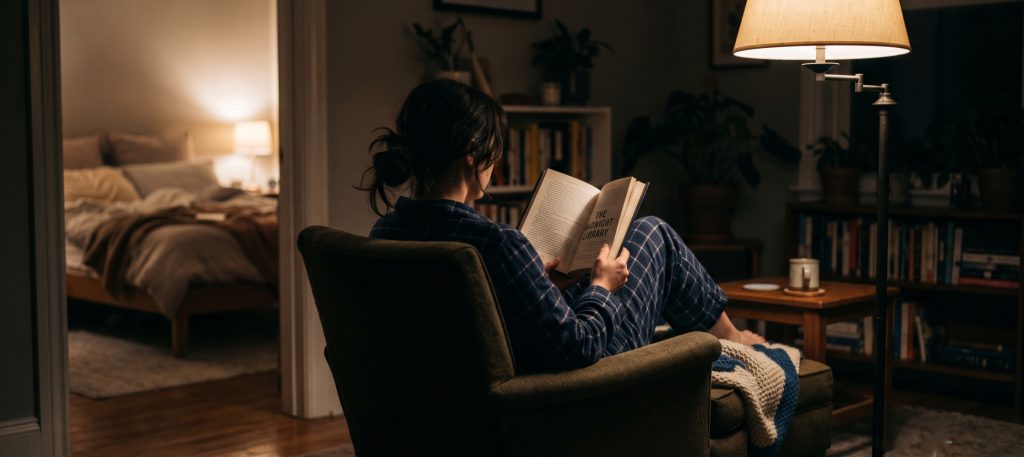
- Read a book or magazine (not on a bright screen) in dim light
- Listen to a calm podcast or audiobook
- Do gentle stretching
- Sit quietly with a cup of herbal tea (no caffeine)
- Practice deep breathing or progressive muscle relaxation
- Do a low-key activity like a jigsaw puzzle or knitting
Avoid:
- Bright screens (phone, tablet, computer, TV)
- Work or anything mentally stimulating
- Eating a large snack
- Checking the time repeatedly
- Anything that makes you feel more alert
Return to bed only when you feel genuinely sleepy again. If you get into bed and wakefulness returns, get up again. Repeat as many times as needed.
What to Expect
The First Week
The first few nights are often the hardest. You may get out of bed multiple times. You may feel like you are sleeping less than before. This is normal and temporary. You are breaking an established pattern, and that takes time.
Weeks 2-3
Most people start noticing that they fall asleep faster when they get into bed. The association between bed and sleep is beginning to strengthen. Middle-of-the-night awakenings may start to shorten.
Weeks 4+
With consistent practice, the bed becomes a strong cue for sleep. Getting into bed begins to feel like a natural trigger for drowsiness rather than anxiety. This is the new association taking hold.
Common Challenges
"I'm worried I'll never feel sleepy enough to go to bed"
If you are following a consistent wake time and not napping, sleep pressure will build. Some nights it may take longer to feel sleepy, especially early in the process. Trust the biology — the drive to sleep always wins eventually.
"Getting out of bed in the middle of winter is miserable"
Keep a warm robe and slippers by the bed. Set up a comfortable spot in another room — a favorite chair with a blanket and a book. Making the out-of-bed experience less unpleasant reduces resistance to following the rule.
"My partner is confused about why I keep getting up"
Explain that you are following a specific behavioral program for your insomnia. Most partners are supportive once they understand the rationale. The disruption is temporary, and the alternative — lying awake in bed for hours — is not restful for either of you.
"I fell asleep on the couch"
This is actually a common issue. If you doze off in another room, you are getting sleep — but in the wrong location. Try to notice the signs of sleepiness earlier and move to bed before falling asleep elsewhere. The couch nap can also undermine sleep pressure.
Combining Stimulus Control With Other Techniques
Stimulus control is most effective as part of a complete CBT-I program:
- Sleep restriction therapy builds the sleep pressure that makes stimulus control easier — you feel genuinely sleepy at bedtime because your time in bed is limited
- Cognitive restructuring addresses the anxious thoughts that make getting out of bed feel pointless or scary
- Sleep hygiene ensures your environment and daily habits support the process
If you are struggling with insomnia, consider talking to your healthcare provider about CBT-I. A trained therapist can guide you through these techniques and tailor them to your specific situation.