What Is CPAP Therapy?
CPAP stands for Continuous Positive Airway Pressure. It is the most common and effective treatment for obstructive sleep apnea (OSA). A CPAP machine delivers a steady stream of pressurized air through a mask while you sleep, keeping your airway open and preventing the pauses in breathing that characterize sleep apnea.
If your doctor has prescribed CPAP therapy, this guide will walk you through everything you need to know to get started.
What's in the Box
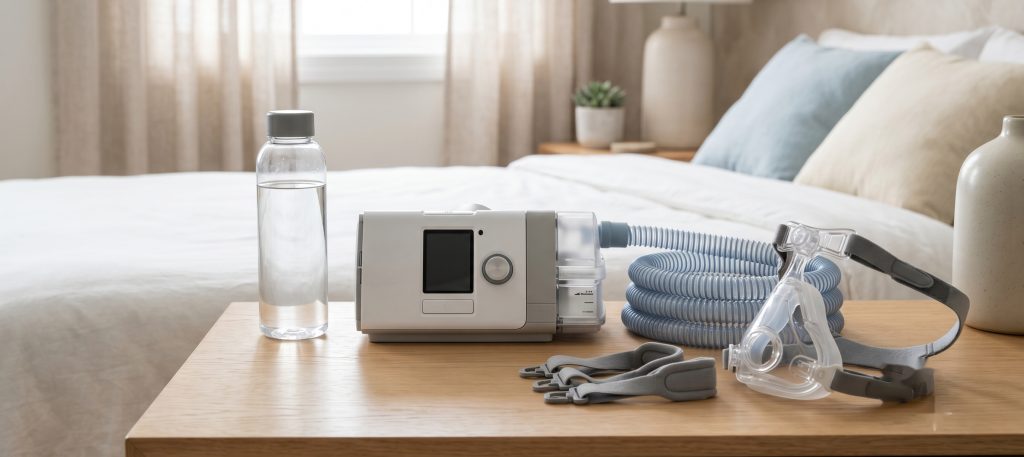
A standard CPAP setup includes:
- CPAP machine (the main unit with motor and controls)
- Humidifier chamber (often built into the machine)
- Tubing (typically 6 feet of flexible hose)
- Mask (nasal, nasal pillow, or full-face — your doctor or equipment provider will help you choose)
- Headgear and straps (to hold the mask in place)
- Power cord
- Filters (disposable and/or reusable)
- SD card or wireless connectivity (for tracking your usage data)
Step-by-Step Setup
1. Choose Your Location
Place the CPAP machine on a flat, stable surface near your bed — a nightstand or bedside table works well. Make sure it is:
- At or below the level of your head (to prevent water from flowing back through the tubing)
- Close enough that the tubing reaches comfortably without pulling
- Near a power outlet
- Away from curtains or anything that could block air intake
2. Fill the Humidifier
Most modern CPAP machines include an integrated heated humidifier. Using it reduces dryness, congestion, and irritation.
- Remove the humidifier chamber from the machine
- Fill it with distilled water to the indicated fill line (never above it)
- Reinsert the chamber firmly until it clicks into place
- Never use tap water, as minerals can build up and damage the machine
3. Connect the Tubing
- Attach one end of the tubing to the air outlet on the CPAP machine
- Attach the other end to your mask
- Make sure both connections are secure but not forced
4. Fit Your Mask
Mask fit is the single most important factor for CPAP comfort and effectiveness. A poorly fitting mask causes leaks, discomfort, and frustration.
For nasal masks and nasal pillows:
- Position the mask with the machine running at your prescribed pressure
- Adjust the headgear straps until the mask seals without feeling tight
- You should be able to fit one or two fingers between the straps and your face
- Lie down and check the seal — the fit may change when you shift positions
For full-face masks:
- Place the mask over your nose and mouth before attaching the headgear
- Tighten straps gradually, starting from the top
- Check for leaks around the bridge of the nose and the chin
5. Adjust Machine Settings
Your sleep provider will typically pre-program your prescribed pressure setting. Most machines also allow you to adjust:
- Ramp time: Starts at a lower pressure and gradually increases to your full setting over 15-45 minutes, making it easier to fall asleep
- Humidifier level: Start at a medium setting and adjust based on comfort
- Heated tubing temperature: If your machine has a heated tube, this prevents condensation (called "rainout")
6. Your First Night
- Put on the mask while sitting up and breathing normally
- Turn on the machine and breathe naturally through your nose
- Lie down and adjust the mask if needed
- Try to relax — it is completely normal for the first few nights to feel unusual
- If the mask feels uncomfortable, try small strap adjustments rather than major changes
Common Challenges and Solutions
Air Leaks
Small leaks are normal. Large leaks reduce therapy effectiveness. Causes include:
- Mask too loose or too tight (overtightening actually worsens leaks)
- Wrong mask size
- Sleeping with your mouth open (consider a chin strap or full-face mask)
Dry Mouth or Nose
- Increase your humidifier setting
- Use a heated tube if available
- Consider a full-face mask if you breathe through your mouth
Feeling Claustrophobic
- Practice wearing the mask while awake, watching TV or reading
- Use the ramp feature to start with lower pressure
- Try a nasal pillow mask, which covers less of your face
Noise
- Modern CPAP machines are very quiet (typically under 30 decibels)
- Check for air leaks, which are the most common source of noise
- Make sure the machine is on a stable surface
Cleaning and Maintenance
Daily:
- Wash the mask cushion with warm water and mild soap
- Empty and rinse the humidifier chamber
- Wipe down the mask and let it air dry
Weekly:
- Wash the headgear and tubing in warm, soapy water
- Rinse thoroughly and hang to dry
- Inspect the mask cushion for wear or deterioration
Monthly:
- Replace disposable filters (most machines use 2 per month)
- Clean reusable filters with warm water — replace every 6 months
- Replace mask cushion or nasal pillows
- Check tubing for cracks or holes
Every 3 months:
- Replace tubing (standard and heated)
- Replace full mask frame
- Inspect humidifier chamber — replace every 6 months or sooner if showing mineral deposits
Tracking Your Progress
Most modern CPAP machines record usage data including:
- Hours of use per night
- Mask leak rates
- AHI (Apnea-Hypopnea Index) — the number of breathing events per hour, the same measure reported in your sleep study
- Pressure data
Many machines connect to companion apps that let you view this data on your phone. Your sleep provider also uses this data to monitor your therapy.
What to aim for:
- Use your CPAP for at least 4 hours per night (insurance compliance requirement)
- Ideally, use it for the entire time you sleep
- AHI below 5 events per hour indicates well-controlled sleep apnea
When to Contact Your Provider
Reach out to your sleep care team if:
- Your mask consistently leaks despite proper fitting
- You are removing the mask during the night without realizing it
- You experience persistent dry mouth, nasal congestion, or skin irritation
- Your AHI remains elevated despite consistent use
- You feel the pressure is too high or too low
Free Downloadable Guide
Want a printable reference? Download our free CPAP Supplies: Replacement Schedule & Cleaning Guide — an 8-page PDF with daily/weekly/monthly checklists, a full replacement schedule table, and troubleshooting tips. Download the PDF.
Key Takeaways
- Place the machine at or below head level on a stable surface near your bed
- Use distilled water in the humidifier
- Mask fit matters more than anything — don't overtighten
- The ramp feature can make falling asleep easier
- Clean your equipment regularly to maintain comfort and hygiene
- Track your data and share it with your provider
- Give yourself at least 2-4 weeks to adjust — it gets easier