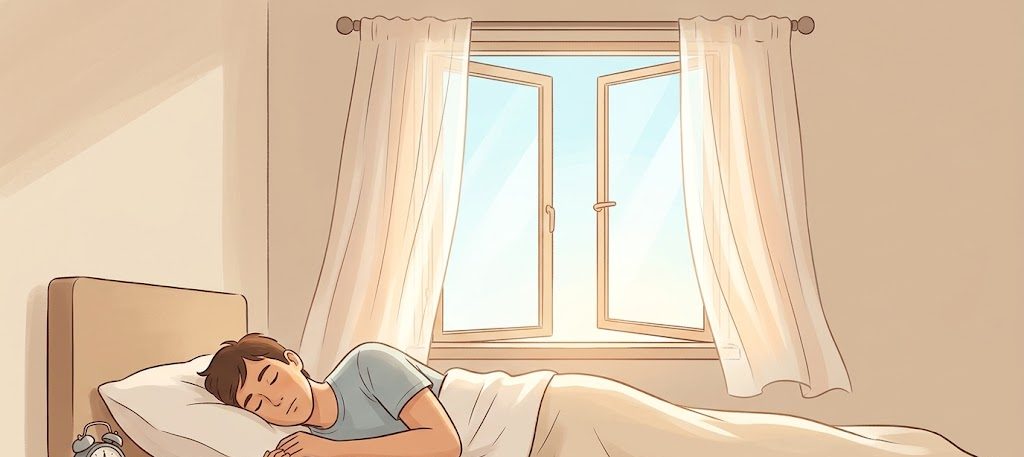
What Is Idiopathic Hypersomnia?
Idiopathic hypersomnia (IH) is a chronic neurological disorder defined by persistent excessive daytime sleepiness that is not explained by another sleep, medical, psychiatric, or medication cause. The word "idiopathic" means "of unknown origin" — and it is aptly named, because the underlying biology is still poorly understood.
IH shares the symptom of excessive daytime sleepiness with narcolepsy, but the clinical picture is usually quite different. Instead of short refreshing naps and REM intrusion phenomena, people with IH tend to sleep long, hard, and non-restoratively. They wake up feeling as though they have been drugged, struggle for hours to become functional, and then push through a day that is marked by persistent fog and sleepiness.
Core Clinical Features
Excessive daytime sleepiness
As in the other central hypersomnias, this is the defining complaint. Patients describe a constant low-grade sleepiness that worsens with sedentary activity, boredom, or warmth.
Long total sleep time
A subset of IH patients — historically called "IH with long sleep time" — regularly sleep more than 10 or 11 hours in 24 hours when allowed to do so. They often need 9 to 10 hours just to function minimally. Even that much sleep does not relieve daytime sleepiness.
The ICSD-3-TR no longer formally subdivides IH by sleep duration, but long sleep remains a common and important feature.
Severe sleep inertia ("sleep drunkenness")
This is arguably the most distinctive feature of IH. Sleep inertia is the normal grogginess after waking, but in IH it is pathological:
- Hours of disorientation, confusion, and difficulty becoming functional after waking
- Inability to wake up with alarms, sometimes requiring multiple alarms, family members, or dangerous stimulants
- Feeling as if drugged or drunk in the morning
- Impaired cognition, slow speech, clumsiness, and emotional blunting that only slowly lifts
This severe morning dysfunction is a red flag for IH and is often worse than the daytime sleepiness itself.
Long, unrefreshing naps
Where narcolepsy type 1 naps are short (15 to 30 minutes) and refreshing, IH naps tend to be long (often more than an hour) and unrefreshing, sometimes with the same severe sleep inertia on waking. Patients often describe naps as making things worse rather than better.
Cognitive symptoms
A persistent "brain fog" is extremely common in IH — difficulty concentrating, word-finding trouble, memory lapses, and slowed thinking. These cognitive symptoms can be as disabling as the sleepiness.
Autonomic symptoms
Some patients report headaches, cold hands and feet, orthostatic lightheadedness, or symptoms overlapping with POTS (postural orthostatic tachycardia syndrome). Whether these are part of IH biology or separate comorbidities is an open question.
What IH Is Not
To meet criteria, IH must not be better explained by:
- Insufficient sleep — ruled out by sleep diary/actigraphy showing adequate opportunity
- Sleep apnea — ruled out or adequately treated on polysomnography
- Circadian rhythm disorder — particularly delayed sleep phase, which can mimic IH
- Medications or substances — including the "rebound" long sleep after sleep deprivation
- Depression and other psychiatric illness — though coexistence is common
- Narcolepsy (type 2) — distinguished by the absence of cataplexy and the MSLT pattern
How IH Is Diagnosed
The ICSD-3-TR criteria require:
- Daily excessive sleepiness for at least three months
- No cataplexy
- Either an MSLT mean sleep latency of ≤ 8 minutes with fewer than 2 sleep-onset REM periods, or a documented total sleep time of ≥ 660 minutes (11 hours) per 24 hours, typically on a 24-hour polysomnogram or by wrist actigraphy with a sleep log
- Insufficient sleep syndrome excluded
- Symptoms not better explained by another sleep disorder, medical or psychiatric illness, or substance use
What the workup looks like in practice
- Detailed history, focused on sleep schedule, nap habits, sleep inertia, morning function, cognitive symptoms, and comorbidities
- 1 to 2 week sleep diary with wrist actigraphy, documenting regular and adequate sleep opportunity (typically ≥ 7 hours per night and often much more in IH)
- Taper of REM-suppressing medications (antidepressants) under clinician supervision before testing
- Overnight polysomnography, to rule out apnea and periodic limb movements
- MSLT the next day
- Alternative: 24- or 32-hour polysomnography in specialized centers, which can document total sleep time ≥ 11 hours and is increasingly preferred for IH
The MSLT is an imperfect tool for IH. Many patients with classical IH symptoms have mean sleep latencies just above 8 minutes and technically miss the cutoff. Long documented sleep time on actigraphy or extended PSG is one way around this — but testing standards vary by center.
Why IH Is Often Missed
Several factors contribute to IH being underdiagnosed:
- Sleepiness is culturally normalized; long sleep is often called "lazy"
- Sleep inertia is easily mistaken for depression or motivation problems
- Cognitive fog is sometimes attributed to ADHD or anxiety
- The MSLT is imperfect and can miss IH
- Many general clinicians are unfamiliar with IH and reach for depression or thyroid explanations first
- Average delay from symptom onset to diagnosis is often more than a decade
If your symptoms match IH and you've been repeatedly dismissed, seeking evaluation at an academic sleep center or a specialized hypersomnia program is a reasonable next step.
Treatment
Because IH is under-studied compared to narcolepsy, treatment historically relied on the same wake-promoting agents used for narcolepsy, applied off-label. This has been changing.
FDA-approved specifically for IH
- Low-sodium oxybate (Xywav) — the first and currently the only FDA-approved medication specifically for idiopathic hypersomnia in adults (2021). Taken nightly; can help with daytime sleepiness and the morning sleep inertia that is so characteristic of IH.
Wake-promoting agents commonly used
- Modafinil / armodafinil — widely used first-line, often effective for daytime sleepiness but less helpful for sleep inertia
- Methylphenidate and amphetamines — effective for some patients, with standard cautions
- Solriamfetol — FDA-approved for narcolepsy and OSA, used off-label in IH
- Pitolisant — histamine H3 inverse agonist, used off-label in IH
Strategies specifically for sleep inertia
- Oxybates at bedtime
- Slow-release stimulants dosed near bedtime, with careful timing to be near-peak at desired wake time (under specialist supervision)
- Light therapy on waking
- Multiple loud alarms placed across the room
- A scheduled "wake-up assistance" routine with a family member
Many patients find that even with optimal medication, long mornings and a need for substantial nighttime sleep remain. Setting realistic expectations matters.
Behavioral and lifestyle
- Regular, adequate sleep schedule. This sounds paradoxical when sleep is the problem, but irregular schedules consistently make IH worse.
- Caution with naps. Long naps tend to be unhelpful in IH; if napping at all, short scheduled naps may work better.
- Careful planning of important activities around times of best alertness.
- Work and school accommodations under the ADA.
Living With IH
IH is typically lifelong, though about 10 to 20% of patients experience some improvement or remission over years. Most patients, however, need long-term treatment.
Practical points:
- Driving. Morning driving, in particular, is dangerous in IH because of sleep inertia. Patients and clinicians should discuss this frankly.
- Work/school. Flexible start times, the ability to take a scheduled brief nap, and accommodations for cognitive fog can be transformative. The Hypersomnia Foundation has specific employer-education resources.
- Community. IH advocacy groups (Hypersomnia Foundation, Project Sleep) provide support, up-to-date treatment information, and clinical trial listings.
- Mental health. Depression and anxiety are common and should be actively addressed, not dismissed as the "real problem."
Key Takeaways
- Idiopathic hypersomnia is a chronic disorder of excessive daytime sleepiness, long sleep, severe sleep inertia, and cognitive fog.
- Naps in IH are long and unrefreshing, unlike the short refreshing naps of narcolepsy.
- Diagnosis requires careful exclusion of insufficient sleep, sleep apnea, circadian disorders, medications, and psychiatric contributors.
- The MSLT with < 2 sleep-onset REM periods, or documented ≥ 11 hours of sleep in 24 hours, supports the diagnosis.
- Low-sodium oxybate (Xywav) is the first FDA-approved medication for IH; other wake-promoting agents are used off-label.
- Sleep inertia and cognitive fog are often the most disabling features and should be specifically targeted in treatment.
- IH is commonly underdiagnosed for years — persistence and evaluation at a specialized sleep center are often necessary.