What to Expect at an Overnight Sleep Study (In Lab)
Written and medically reviewed by Matthew Viereck, MD, board-certified sleep medicine physician · Reviewed November 2026 · Editorial standards
Chapters
- 0:00What to expect at an overnight sleep study
- 0:15What this video covers
- 0:39Why a lab
- 1:24What gets measured
- 2:06Getting ready: protect your sleep
- 2:37Getting ready: the day of
- 3:04Arriving and getting set up
- 3:33The night
- 3:54What if I can't sleep?
- 4:28A split night
- 5:03The morning, and your results
- 5:22Three things to remember
About this video
If your doctor has ordered an overnight sleep study, it is normal to feel a little uneasy. This video walks through the night in a sleep lab, so you know what to expect and how to get a good night of data.
We cover why the study is done in a lab, every sensor and what it measures, how to get ready the day before and on the day itself, how the night goes, the worry we hear most (what if I can't sleep in the lab?), what a split night study is, and what happens in the morning.
The most important message: you do not need a perfect night. Almost everyone sleeps a little worse in the lab, and even a few hours of sleep usually gives enough data. Protect your sleep the day before: no naps, no extra sleep the night before, and as little caffeine as you can. And if you are woken for CPAP partway through, the study found what it was looking for.
Transcript
Show
0:00What to expect at an overnight sleep study
This video is for education only. It is not medical advice. Follow your own sleep lab's instructions, and talk with your own clinician about your test. What to expect at an overnight sleep study, and how to get a good night of data.
0:15What this video covers
If your doctor has ordered an overnight sleep study, it is normal to feel a little uneasy. You sleep somewhere new, with sensors on, while someone watches the recording. Knowing how the night goes helps. In this video we will cover why the study is done in a lab, what it measures, how to get ready, how the night goes, what happens if you cannot sleep, and what a split night study is.
0:39Why a lab
An overnight study in a sleep lab is called polysomnography, which simply means many recordings during sleep. Unlike a home sleep apnea test, it measures sleep itself. It shows when you are actually asleep, which stage of sleep you are in, and what your breathing, heart and legs are doing in each one. The American Academy of Sleep Medicine recommends an in-lab study rather than a home test for people with significant heart or lung disease, a nerve or muscle condition that weakens breathing, chronic opioid use, a past stroke, or severe insomnia. It is also the next step when a home test was negative, unclear or failed but sleep apnea is still suspected, and it is the test for many sleep problems other than sleep apnea.
1:24What gets measured
Here is what gets measured. Small sensors on the scalp read brain waves. They show when you fall asleep, which stage of sleep you are in, and every brief wake up. Sensors beside the eyes pick up the eye movements of REM sleep, the stage when most dreaming happens, and one on the chin tracks muscle tone. Sensors on the legs record leg movements. Stickers on the chest record your heart rhythm. A small sensor at the nose and mouth measures airflow, two soft belts around the chest and belly measure breathing effort, and a clip on a finger measures oxygen. A microphone picks up snoring, and a night vision camera shows your sleep position. Nothing goes through the skin, and nothing hurts.
2:06Getting ready: protect your sleep
Getting ready starts the day before. Every lab has its own instructions, so follow yours first. The most common mistakes are about sleep itself. Try to get a normal night of sleep the night before. Do not try to stock up on extra sleep, and do not nap on the day of the study. Cut back on caffeine as much as you can; some labs ask you to skip it for a full day. And if you take a stimulant medicine, ask the lab when to take it that day, because taking it late is a common mistake that can keep you awake.
2:37Getting ready: the day of
On the day itself, wash your hair, but skip conditioner, oils, gels and hairspray, because the scalp sensors will not stick through them. Take your usual medicines unless the lab tells you otherwise. Skip alcohol that day, and eat dinner before you arrive. Bring pajamas, your toiletries, any medicines you take at night or in the morning, and your own pillow if you like. Something relaxing to do before lights out helps too, like a book.
3:04Arriving and getting set up
Most studies start in the evening. The room is private, more like a plain hotel room than a hospital room. A sleep technologist, the person who runs the study, attaches the sensors. The scalp sensors go on with a paste, and the wires gather into a small box near the bed, so you can still roll over. Before lights out, the technologist runs a short check. You look left and right, blink, wiggle your toes, and breathe in and out. That makes sure every sensor is recording.
3:33The night
Then the lights go out, close to your usual bedtime. The technologist watches the recording from another room and can hear you, so if you need the bathroom, just say so, and they will unhook you. If a sensor slips off in the night, they may come in to fix it. Sleep on your side or your back, whatever is normal for you, and keep your usual bedtime routine as much as you can.
3:54What if I can't sleep?
The worry we hear most is, what if I cannot sleep in the lab? It is not your own bedroom, and almost everyone sleeps a little worse there. The team expects that. You do not need a perfect night. Most people sleep more than they think, and even a few hours of sleep usually gives enough data, especially if it includes some REM sleep and some time on your back, when breathing problems are often at their worst. If you cannot sleep at all, the technologist will not force it, and may help you get more comfortable. Sometimes a second night or a home test is needed, depending on your doctor and the lab.
4:28A split night
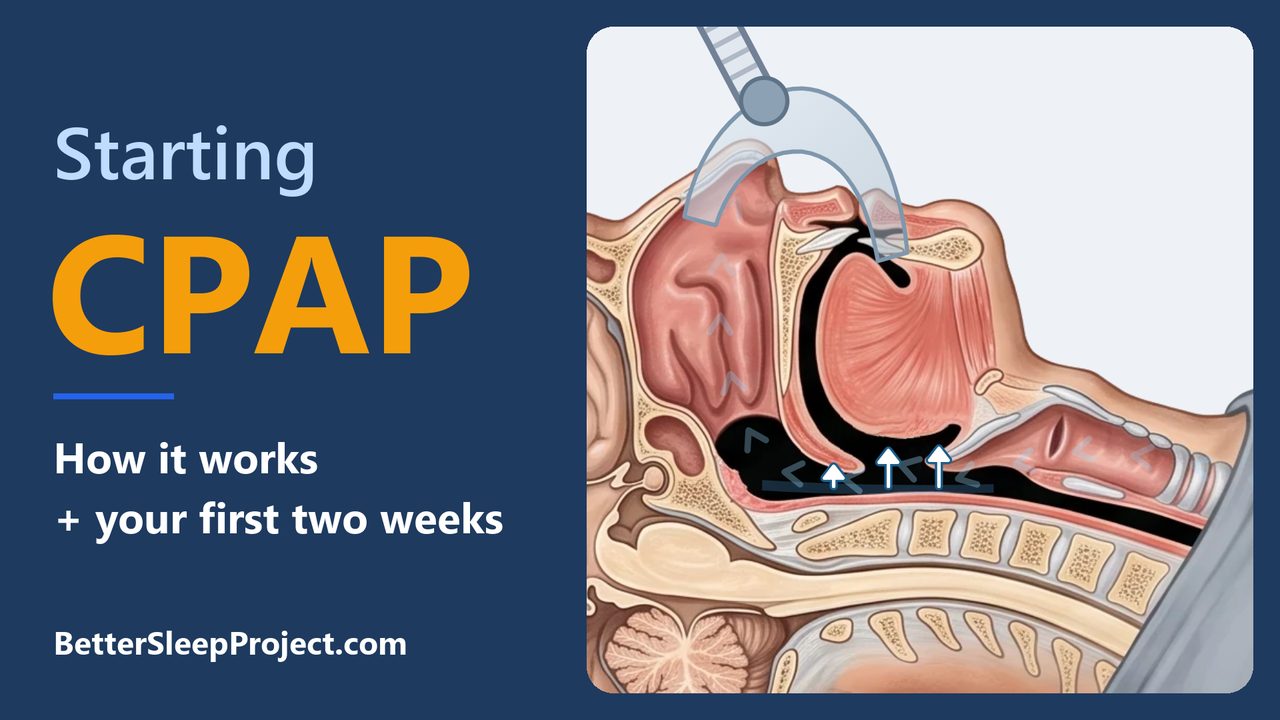
Some studies are split night studies. If the first part of the night clearly shows sleep apnea, the technologist may start CPAP partway through. CPAP is a machine that gently blows air through a mask to hold the throat open. So if you are woken for it, it means the study found what it was looking for. The technologist fits a mask and slowly adjusts the air pressure while you sleep. If you can, try a mask on beforehand. Speak up if it leaks or feels uncomfortable, because they can switch it. Lots of people sleep better once it is on. Our video on starting CPAP explains how it works.
5:03The morning, and your results
In the morning, the technologist wakes you, usually early, and removes the sensors. The paste washes out with warm water. The technologist cannot give you results that morning. A sleep doctor reviews the whole night, and you go over the results at a follow up visit. If the study shows sleep apnea, that is when you talk about treatment.
5:22Three things to remember
Three things to remember. You do not need a perfect night; a few hours of sleep usually gives enough data. Protect your sleep the day before: no naps, no extra sleep the night before, and as little caffeine as you can. And if you are woken for CPAP partway through, the study found what it was looking for. This video is not medical advice; follow your own lab's instructions and talk with your own clinician. More about sleep studies, with every reference, is at bettersleepproject.com. Thank you for watching.
References
More videos
Watch on YouTube or see every video on the Better Sleep Project channel.
Medical Disclaimer: This video is based on published sleep research and is provided for general education. It is not medical advice. Talk with your own clinician before starting, stopping or changing any treatment. Read full disclaimer.